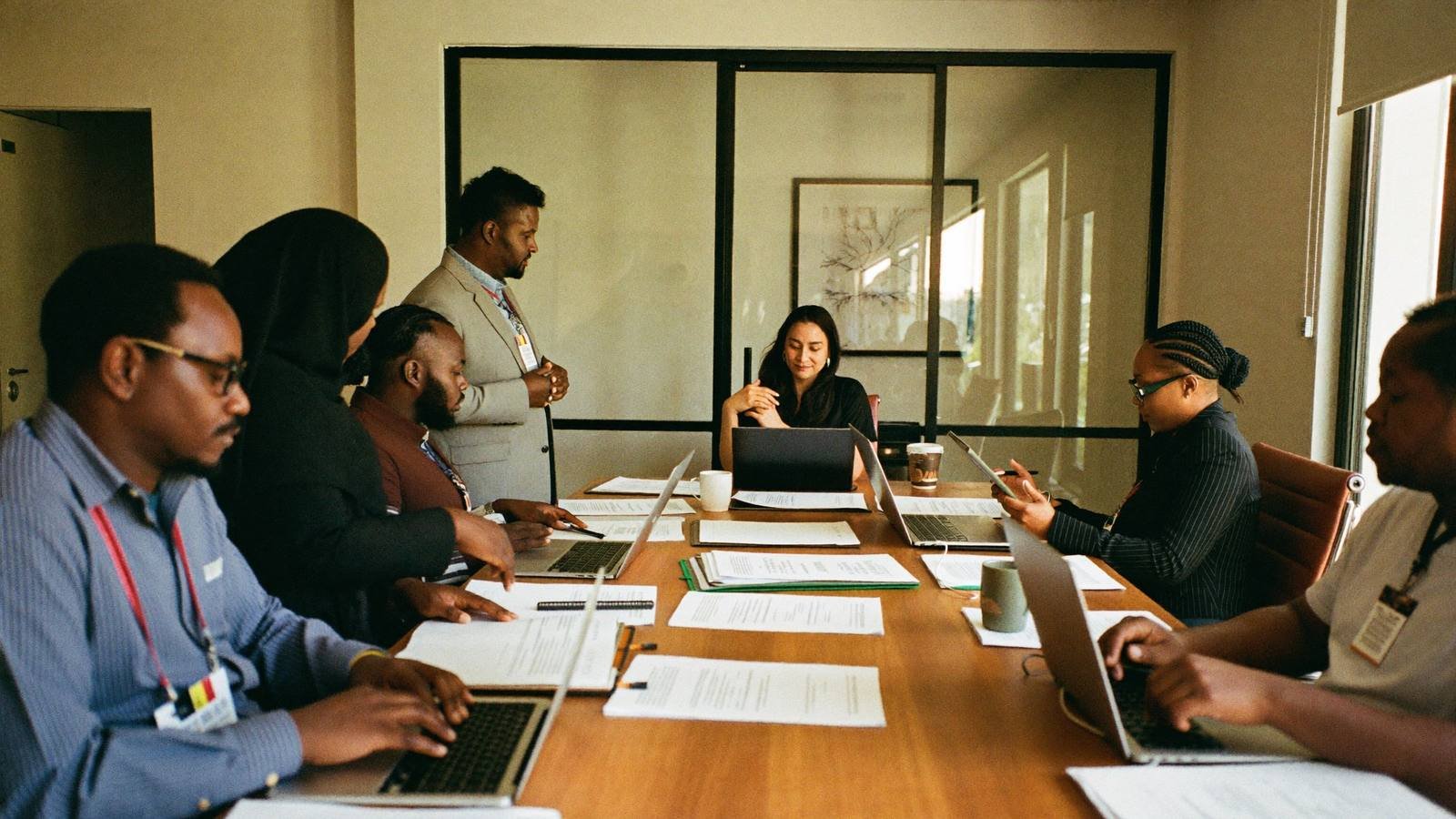
Women owned is easy to claim and easy to certify. Kenya's AGPO framework recognises our ownership, and that recognition matters in public procurement. But a certificate describes a shareholding. It does not describe a firm. What actually changes when women own a delivery business in this region shows up in quieter places.
Half the beneficiaries of the programmes we serve are women, yet field research in this region routinely underrepresents them. Our teams are built so that women respondents are interviewed by women enumerators where culture requires it, in safety net registration, in gender and GBV service mapping, in beneficiary interviews for Baxnaano. The data is simply better when the people collecting it can reach everyone.
We recruit deliberately for women in roles the industry has kept male: site supervision, engineering review, field logistics. Not as a quota exercise, but because a firm led by women attracts talented women who have been overlooked elsewhere, and that is a hiring advantage our competitors hand us for free.
Firms built by people who had to prove themselves twice tend to be careful about promises. We bid for what we can finish, we report what we actually find, and we hand over properly. Clients experience this as reliability. We experience it as the only way a firm like ours survives and grows in this market.
Every completed assignment is quiet evidence for the next woman founding a firm in Mandera or Mogadishu: that a women owned business from the periphery can hold national mandates and deliver them well. That signal is not in any contract. It may be the most important thing we build.
A certificate describes a shareholding. Delivery describes a firm.Asma Dakane Bare, Managing Director